
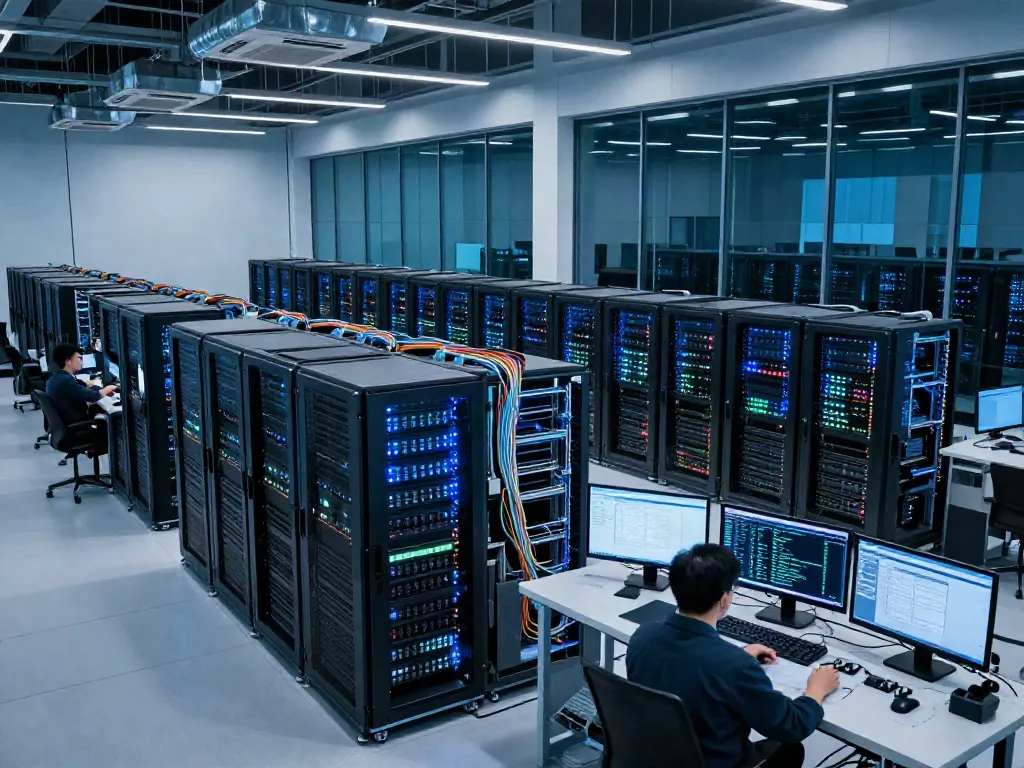
The Basics of AI Data Centers
AI data centers have emerged as a critical backbone for the rapidly evolving landscape of artificial intelligence (AI) technology. These specialized facilities are tailored to support the immense computational demands of AI applications, housing the necessary hardware and infrastructure to train, deploy, and deliver AI services efficiently. Understanding how these data centers function is essential for anyone looking to participate in the growing AI data center economy and leverage the opportunities it presents.
What Defines an AI Data Center?
At their core, AI data centers are distinct from traditional data centers due to their specific architecture and purpose. While traditional data centers primarily focus on hosting web services and managing databases, AI data centers are optimized for high-density GPU computing. This optimization is necessary to handle the complex algorithms and large datasets that AI technologies require.
Essential Components of AI Infrastructure
The architecture of an AI data center typically includes high-performance computing (HPC) systems, specialized hardware such as Graphics Processing Units (GPUs), and extensive storage solutions designed to accommodate significant data loads. Other essential components include:
- Networking Equipment: Robust networking systems that enable rapid data transfer between GPUs and storage solutions.
- Cooling Systems: Advanced cooling mechanisms to manage the heat generated by high-density computing workloads.
- Power Supply: Reliable and scalable power systems that ensure continuous operation of AI workloads.
Common Misconceptions About AI Data Centers
Many people mistakenly believe that any data center can adequately support AI workloads. However, the specialized requirements of AI processing—such as the need for rapid computation and substantial power consumption—mean that not all facilities are suited for this purpose. Moreover, some might think that AI data centers are solely for large tech companies, ignoring the growing trend of individual participation in the AI token economy, facilitated by platforms like 51 AIpower.
Understanding the AI Token Economy
The emergence of the AI token economy signifies a shift in how AI services are consumed and compensated. In this ecosystem, AI data centers play a pivotal role, providing the necessary computational resources while also serving as facilitators of transactions involving AI tokens, which measure the usage of AI services.
The Role of AI Data Centers in Tokenization
AI tokens are units of measurement, similar to kilowatt-hours for electricity, used to bill users for AI services based on their consumption. Data centers process these tokens by managing the input and output during AI model inferences. As a participant in the AI token economy, understanding how these tokens work can significantly influence your engagement and potential rewards.
How Power Plans Support AI Operations
Power plans are intrinsic to the functioning of AI data centers. When users opt into a power plan, they contribute to the electricity and computational capacity required to run AI workloads. Each power plan correlates with specific levels of support and expected contributions, determining how effectively the data center can manage workloads and process tokens.
Connecting AI Resources to Token Demand
The dynamic nature of AI workloads requires a responsive infrastructure that can adapt to varying levels of demand. AI data centers facilitate this by aligning their resources with the real-time requirements of AI applications. The utilization of smart resource management technologies ensures that power is allocated efficiently, maximizing performance while minimizing costs.
Security Considerations for AI Data Centers
As AI data centers handle vast amounts of sensitive data and are essential for AI operations, ensuring their security is paramount. Various security considerations need addressing to prevent breaches and maintain trust within the token economy.
Potential Risks in AI Infrastructure
AI data centers are vulnerable to a range of security threats, including:
- Cyberattacks: Data centers can be the target of hacking attempts, aiming to steal sensitive information or disrupt services.
- Physical Security Risks: As with any physical infrastructure, risks such as vandalism or theft can pose significant threats.
- Data Privacy Issues: The handling of personal data necessitates compliance with various regulations, and any lapses can lead to severe consequences.
Protocols for Ensuring Data Security
To mitigate these risks, AI data centers implement comprehensive security protocols, including:
- Firewalls and Intrusion Detection Systems: These systems monitor incoming and outgoing traffic, providing alerts on suspicious activities.
- Encryption: Sensitive data is encrypted both at rest and in transit, ensuring protection from unauthorized access.
- Access Controls: Restricting access to critical infrastructure components helps prevent internal and external threats.
Importance of Monitoring and Compliance
Continuous monitoring for security breaches and compliance with regulatory standards is crucial. AI data centers routinely conduct audits and assessments to ensure they adhere to relevant laws and best practices, thereby maintaining their integrity and reliability.
Measuring Efficiency in AI Data Centers
Efficiency is a critical component of operational success in AI data centers. As the demand for AI processing grows, optimizing resource use becomes essential.
Key Performance Indicators for AI Infrastructure
To gauge efficiency effectively, data centers track several key performance indicators (KPIs), including:
- Power Usage Effectiveness (PUE): A measure of how efficiently a data center uses energy, specifically the ratio of total building energy usage to the energy used by the IT equipment.
- Cooling Efficiency: This metric assesses how effectively the cooling systems manage heat relative to the computational workload.
- Utilization Rates: Monitoring how effectively the computational resources (like GPUs) are being used is essential for optimizing operational costs.
Best Practices for Energy Management
Implementing best practices in energy management contributes to overall efficiency. These practices may include:
- Dynamic Resource Allocation: Adjusting resource allocation based on real-time demand helps reduce energy waste.
- Utilizing Renewable Energy Sources: Incorporating renewables not only reduces carbon footprints but also can lower operational costs in the long term.
- Regular Maintenance Checks: Keeping systems well maintained ensures they operate at peak efficiency, reducing the risk of unexpected downtime.
Evaluating Token-Metered Services
As AI services become more tokenized, evaluating their performance against metered usage becomes critical. Data centers can achieve this through transparent reporting mechanisms that allow users to track their contributions and rewards effectively.
The Future of AI Data Centers in 2026 and Beyond
The landscape of AI data centers is continually evolving, driven by technological advancements and changing market demands.
Emerging Trends in AI Infrastructure Design
As we look towards 2026 and beyond, several emerging trends are shaping the design of AI data centers:
- Modular Designs: Facilities are increasingly adopting modular approaches that allow for rapid expansion and reconfiguration based on demand.
- AI-Driven Management Systems: Implementing AI to optimize resource allocation, cooling, and energy consumption is becoming mainstream.
- Sustainable Practices: The move towards sustainability is prompting the adoption of energy-efficient technologies and renewable energy sources in data center operations.
Advancements in Cooling and Power Efficiency
Future AI data centers will likely leverage cutting-edge cooling technologies and power management systems that reduce energy consumption while maintaining high performance levels. Innovations such as liquid cooling and advanced heat recovery systems can play a significant role in enhancing efficiency.
Predictions for AI Data Center Growth
Market analysts predict substantial growth in AI data centers, driven by the increasing adoption of AI technologies across diverse sectors such as healthcare, finance, and autonomous vehicles. Furthermore, as organizations seek to maximize their AI capabilities, the demand for efficient and scalable data center solutions will continue to rise.
What new technologies are impacting AI data centers?
Emerging technologies such as quantum computing, edge computing, and advanced machine learning algorithms are poised to impact AI data centers significantly. These innovations will enable data centers to handle more complex workloads and improve their operational efficiency.
How do AI data centers differ from traditional data centers?
While traditional data centers focus on general-purpose computing, AI data centers are specifically designed for optimized AI workloads, featuring high-density GPU computing, enhanced cooling systems, and specialized power management practices.
What are the environmental impacts of AI data centers?
The environmental impact of AI data centers is a growing concern. Issues such as high energy consumption and carbon emissions must be addressed through sustainable practices and the use of renewable energy sources.
How to choose the right power plan for an AI data center?
Selecting the appropriate power plan involves considering factors such as workload requirements, operational costs, and sustainability goals. Understanding the specific needs of your AI workloads will help you make informed decisions.
What role does renewable energy play in AI data centers?
Integrating renewable energy sources into AI data centers is essential for reducing environmental impact and ensuring a sustainable future. This shift not only helps in compliance with regulations but also enhances the overall resilience of data center operations.